ISO 45001 Accreditation in the UK
Getting ISO 45001 accreditation shows that the health and safety system of your workplace has been independently checked by a UKAS-accredited body, which is the UK standard for safety. It is a visible proof that your efficient organisation handles workplace risks responsibly, along with meeting legal and HSE requirements. Also, it shields employees, contractors, and visitors alike.
Accreditation also shows that your system is well-structured, evidence-based, and always improving. With safety becoming a key factor in UK tenders and regulated supply chains, especially in sectors like construction, manufacturing, logistics, healthcare, and utilities, having ISO 45001 is increasingly expected — and gives your organisation a strong edge.
ISO 45001 Occupational Health and Safety Management System (OH&S Context)
Although ISO 45001 targets workplace safety rather than environmental performance. It mixes seamlessly with systems like ISO 14001. Several UK organisations use integrated safety and environmental management to make the obeying of rules, reporting, and governance easier. Core areas include:
- Handling risks and staying safe
- Reporting and investigation of incidents
- Operational and emergency procedures
- Stakeholder communication and engagement
This integrated approach not only strengthens safety performance but also supports ESG objectives and makes audits more efficient.
Objectives of ISO 45001
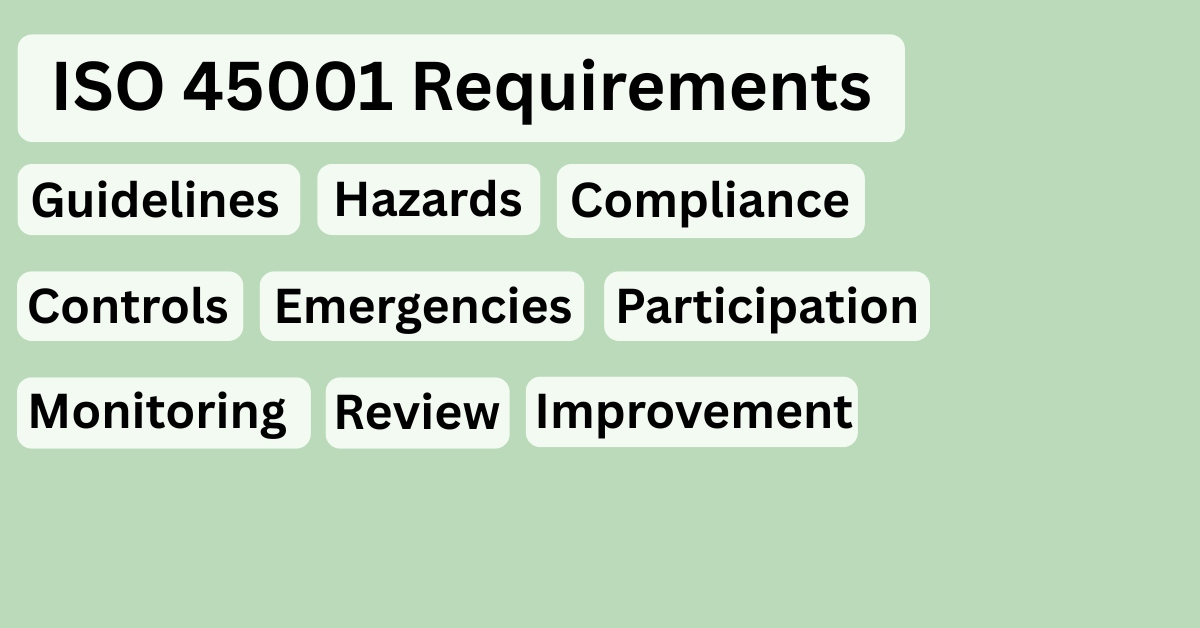
The purpose of ISO 45001 is to reduce workplace accidents and ill health. It is also to raise awareness regarding hazards and promote a strong prevention culture. It strengthens legal compliance, encourages employee participation, and builds safer operational systems and behaviours. For UK organisations, these objectives also enhance tender credibility and provide confidence in meeting HSE requirements.
ISO 45001 Training
A successful ISO 45001 training prepares staff to manage health and safety at all levels. It covers UK legal duties, hazard identification and risk controls. It also prepares for incident reporting, emergency response, and documenting safety performance. The training of specialist management and internal auditors ensures teams can maintain compliance and continually improve the OH&S system over the long term.
ISO 45001 Consultant
External ISO 45001 consultants support organisations with gap assessments, system design, risk frameworks, documentation, training, internal audit preparation, and certification readiness. Their expertise streamlines implementation and ensures the system aligns with UKAS audit expectations.
ISO 45001 Implementation Training
Implementation training helps internal teams set up an effective OH&S management structure, document hazards and legal obligations, define KPIs, and monitor performance. It also prepares teams for certification audits, enabling them to manage the system independently without relying on external support.
ISO 45001 Gap Analysis
A gap analysis evaluates current workplace safety practices against ISO 45001 certification requirements, highlighting compliance shortfalls, documentation needs, risk control weaknesses, training gaps, and areas for audit improvement. This process is essential for seeking ISO 45001 accreditation, which creates a clear roadmap to achieve an audit-ready and fully effective OH&S management system.
How to Get ISO 45001 Certification
To achieve ISO 45001 certification in the UK, organisations follow a structured roadmap that aligns with ISO 45001 certification requirements and leads to ****formal ISO 45001 accreditation:
- Conduct a gap analysis of current OH&S practices
- Build and document the OH&S Management System (OHSMS)
- Train staff and assign clear roles and responsibilities
- Perform internal audits and management reviews
- Engage a UKAS-accredited certification body for Stage 1 and Stage 2 audits
- Maintain certification for three years, with annual surveillance audits to ensure ongoing adherence to ISO 45001 certification requirements
If you’re already certified to ISO 9001, several processes — such as document control, internal audits, and management reviews — will support your ISO 45001 implementation. Explore our detailed guide on ISO 9001 requirements for cross-system alignment.
FAQ
Q1: How to Get ISO 45001 Certification in the UK?
To get ISO 45001 certification, organisations must meet ISO 45001 certification requirements, implement a documented safety system, conduct internal audits, and pass certification audits through a UKAS-accredited provider. Training, hazard controls, and compliance evidence are essential for approval.
Q2: How long does it take to get ISO 45001 certified in the UK?
Typically 3–6 months, depending on your current safety systems and audit readiness.
Q3: Do you need an external consultant for ISO 45001?
Not required, but an ISO 45001 consultant accelerates documentation, training, and audit success — especially in high-risk industries.
Q4: Is ISO 45001 certification mandatory in the UK?
No, but it provides credible proof of HSE compliance, often required in UK tenders and supply chains.
Conclusion
By fulfilling ISO 45001 certification requirements, a strong safety culture is established, job-related dangers are reduced, and employees are protected. It also shows that requirements are legally met and that work systems are at their best, preparing you for ISO 45001 accreditation.